
Why Seeing Architectural Panels in Person Could Change the Way You Specify Materials

Why Seeing Architectural Panels in Person Could Change the Way You Specify Materials
Online images are useful, but they rarely tell the full story of an architectural surface.
A panel can look one way on screen and feel completely different in person once texture, grain, scale, light and finish come into play.
For architects, interior designers and clients, seeing materials in person can make the decision-making process clearer, more confident and more connected to the final space.
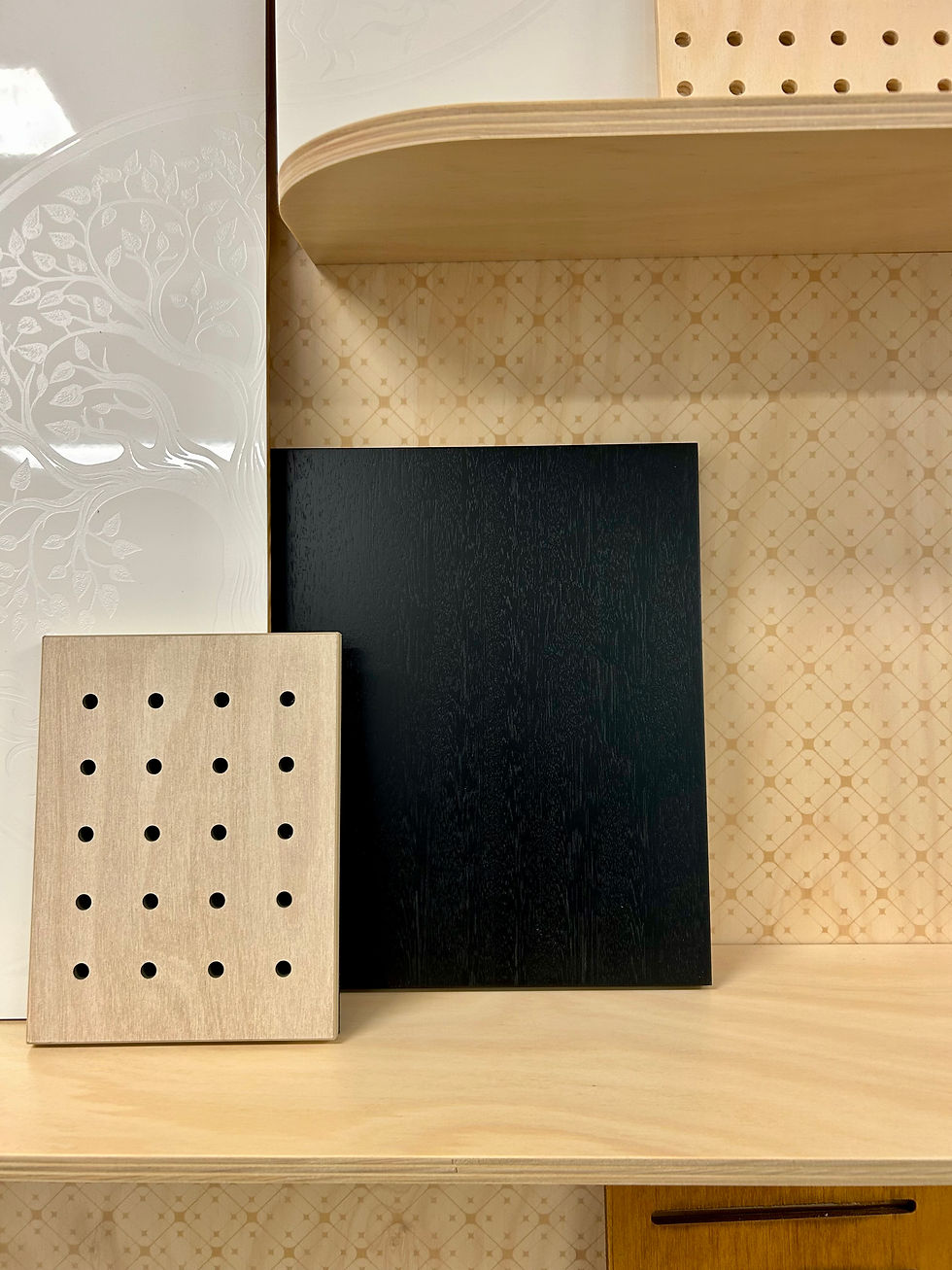
At ARTIEM, the showroom is designed to help project teams explore panel systems, finishes and surface details in a more tangible way before moving toward specification.

Materiality is difficult to judge on screen
Materiality is more than colour.
It includes texture, grain direction, surface movement, tonal variation, depth, reflectivity and the way a finish responds to light.
On screen, these qualities can flatten.
A timber surface may look uniform in a photo, but feel much warmer and more layered in person. A subtle pattern may appear quiet online, but reveal more rhythm and detail when viewed up close.
Seeing architectural panels in person helps designers understand the real surface character — not just the image of it.

Scale changes how a pattern is read
A pattern does not behave the same way at every distance.
A panel detail that feels strong in a close-up photo may become calm and architectural when viewed across a room. The opposite can also happen: a pattern that looks subtle in isolation may feel more expressive when repeated across a full wall or ceiling.
This is why scale matters.
When reviewing panels in person, designers can consider two important readings:
Close-up read:
What does the surface feel like when someone is standing near it?
Room read:
How does the pattern behave from a distance within the overall interior?
Both readings matter when specifying architectural panels. The right choice should work as a detail and as part of the larger space.
Light can completely change the surface
Light affects how every architectural surface is experienced.
Natural light, raking light, artificial lighting, shadow and viewing angle can all change the way a panel reads.
A textured surface may feel more dimensional under side lighting.
A timber finish may appear warmer in soft light and more graphic under direct light.
A pattern may become more visible at certain angles and more restrained from others.
This is difficult to judge from a screen.
Seeing panels in person allows designers and clients to understand how light interacts with the surface before committing to a direction.

Finishes need to be compared side by side
Material selection often becomes clearer through comparison.
Looking at one panel in isolation can be useful, but seeing multiple systems, finishes and textures together helps reveal the differences more clearly.
A showroom visit can help compare:
timber tones
panel systems
perforation styles
slot and groove options
slat profiles
solid panel finishes
plywood surfaces
decorative and feature applications
refined acoustic solutions
This side-by-side review helps project teams move from broad inspiration to more precise selection.
It also helps clarify whether a space needs a quiet background surface, a stronger feature moment, or a system that balances visual rhythm with acoustic performance.

The right material choice is often felt, not only selected
Some design decisions are not made through data alone.
A finish may meet the brief technically, but still need to feel right in the context of the project.
The warmth of timber, the softness of a surface, the strength of a pattern, or the calmness of a finish can all influence the final decision.
For clients, seeing materials in person can also make the process easier to understand.
It turns a specification conversation into something more tangible. Instead of choosing from a screen, they can respond to the surface directly.
This can help align the architect, interior designer, client and project team before the specification moves forward.

Showrooms help connect inspiration to specification
A showroom is not just a display space.
It can work as a decision tool.
It helps bridge the gap between early inspiration and final specification by allowing designers to review real surfaces, compare options and understand how different systems may suit different applications.
After reviewing panels in person, the next steps are usually clearer:
choose the most suitable system
refine the material or finish direction
confirm the visual strength of the pattern
review acoustic or technical requirements
request samples if needed
move toward specification with more confidence
This process helps reduce uncertainty and supports better project decisions.
Why it matters for architectural interiors
Architectural panels are not only decorative elements.
They shape the way a space feels, performs and is experienced.
They can add warmth, rhythm, texture, acoustic comfort, visual identity and a stronger relationship between material and architecture.
Because of this, they deserve to be reviewed carefully.
Seeing panels in person gives designers and clients a clearer understanding of how each surface may behave in the final environment — not just how it appears in a photograph.
Conclusion
Seeing architectural panels in person could change the way materials are specified because it makes the decision more real.
Texture, scale, grain, pattern, finish and light are easier to understand when they can be experienced directly.
At ARTIEM, the showroom is designed to help architects, interior designers and clients explore systems, finishes and material details in person before moving toward specification.
Visit the ARTIEM showroom to see the systems, finishes and surface details up close.
Explore ARTIEM Systems:https://www.artiem.com.au/systems
Explore Technical Resources:https://www.artiem.com.au/technical-resources
“panel systems” → https://www.artiem.com.au/systems
“technical requirements” → https://www.artiem.com.au/technical-resources
“acoustic performance” → https://www.artiem.com.au/systems
“Visit the ARTIEM showroom” → https://www.artiem.com.au/contact-us


Comments